
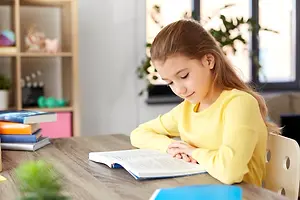
A child sits down with a book they chose themselves. A few pages later, their finger is tracing every line. They reread the same sentence, lose their place, rub their eyes, and eventually close the book.
From across the room, it can look like frustration with reading. Sometimes, the eyes deserve a closer look too.
Reading asks children to do far more than recognize letters. Their eyes need to focus at close range, move accurately across a page, work together, and shift smoothly from one line to the next. When one of these visual skills creates difficulty, reading may feel more tiring than parents realize.
At Oakley Square Eye Associates, a pediatric eye exam can help Cincinnati families understand how their child sees and uses their vision during everyday tasks.
Which Reading Struggles Can Signal Vision Problems?
Reading struggles come in many forms, and vision represents one possible piece of a much larger puzzle.
Children rarely have the vocabulary to describe a subtle visual problem. Instead, parents may notice behaviors during homework, reading, crafts, or other close-up activities.
Possible signs include:
- Frequently losing place while reading
- Skipping words or lines
- Using a finger to follow text
- Rubbing the eyes during close work
- Frequent blinking
- Headaches during or after reading
- Tilting the head while reading
- Complaining about double vision
- Avoiding books or other close-up activities
- Difficulty maintaining attention during reading
These behaviors can have several causes. A comprehensive pediatric eye exam helps determine whether eyesight or visual function may be contributing.
How Can Eye Tracking Affect Reading Struggles?
Think of eye tracking as the quiet choreography behind a page of text.
A child’s eyes move from word to word and across each line before finding the beginning of the next. These movements happen again and again as the story progresses.
When tracking feels difficult, a child may lose their place or skip sections of text. They might rely on a finger as a guide or return to a sentence they have already read.
Reading can then become slower and more demanding.
Oakley Square Eye Associates includes tracking among the visual skills that may be assessed during a pediatric eye exam. Looking at tracking alongside visual acuity and other aspects of vision gives the eye doctor a broader picture than distance clarity alone.
Why Does Eye Teaming Matter for Reading?
Two eyes need to coordinate while a child reads.
Binocular vision describes how the eyes work together as a team. Comfortable coordination helps a child maintain a single view of the words in front of them while moving through a page.
A child can have clear eyesight while experiencing difficulty with another aspect of visual function. This is one reason a comprehensive eye exam looks beyond whether a child can identify letters on an eye chart.
Oakley Square Eye Associates may assess eye teaming, alignment, depth perception, and other visual skills based on the child’s age and needs.
For parents, the important clue is often the pattern. Reading difficulty paired with headaches, double vision, frequent eye rubbing, or other visual symptoms gives you useful information to share during the exam.
Can Focusing Problems Make Reading Harder?
A chapter book, worksheet, tablet, and classroom board all ask something slightly different from a child’s focusing system.
During reading, the eyes need to maintain clear focus at close range. At school, children also shift between near and far distances throughout the day.
When visual tasks become uncomfortable, a child may start taking frequent breaks, rubbing their eyes, or avoiding close work. Parents may see the unfinished worksheet. The child may simply know that reading feels exhausting.
Those observations deserve attention, especially when the pattern repeats.
A pediatric eye exam can evaluate focusing along with other areas of visual function and eye health. The goal is to understand what the child’s eyes are doing rather than guessing from behavior alone.
Can 20/20 Vision Miss Reading Struggles?
Seeing 20/20 provides useful information about visual acuity, particularly how clearly someone can see at a tested distance. Reading places additional demands on the visual system.
That means a child’s vision deserves a broader evaluation when parents continue noticing symptoms during reading or schoolwork.
A comprehensive pediatric eye exam may assess:
- Distance and near vision
- Refractive errors
- Eye alignment
- Binocular vision
- Focusing
- Tracking
- Depth perception
- Color and peripheral vision
- Overall eye health
Reading struggles alone cannot tell parents which visual skill, if any, needs attention. A thorough exam can help separate assumptions from useful answers.
How Can Pediatric Eye Exams Find Vision Problems?
Reading difficulties can leave parents searching for a single explanation. A comprehensive pediatric eye exam helps answer one important part of that question: how well is your child’s visual system handling the work?
At Oakley Square Eye Associates, pediatric eye exams assess more than visual acuity. Depending on your child’s age and needs, the exam may check focusing, tracking, binocular vision, eye alignment, depth perception, peripheral vision, color vision, hand-eye coordination, and overall eye health.
Parents also bring valuable information to the appointment. Share what you see during homework, what your child says about reading, and any comments from teachers. A pattern such as headaches after reading, repeated eye rubbing, or losing place on the page gives your eye doctor useful context.
The goal is to identify any vision concerns that may make reading more demanding.
Can Vision Problems Affect Reading Difficulties?
Vision and reading overlap, but they represent different pieces of a child’s development.
A vision problem can make visual tasks uncomfortable or difficult. For example, trouble tracking accurately across a page may affect how comfortably a child follows lines of text. Focusing or eye teaming concerns may also make sustained close work more tiring.
Reading disorders and other learning difficulties involve factors beyond eyesight. An eye exam diagnoses eye and vision conditions rather than learning disorders.
This distinction helps families choose the right support. When a pediatric eye exam finds a vision problem, your optometrist can recommend care for that specific concern. Other reading or learning needs may call for support from your child’s school or another qualified professional.
The goal is a clearer picture of what your child needs, with each concern addressed by the right person.
What Can Pediatric Vision Treatment Include?
When an eye exam identifies a vision concern, treatment depends on what the doctor finds.
Some children need prescription eyeglasses to bring the world into sharper focus. Others may be candidates for contact lenses as they grow and become ready for the responsibility of lens care.
Depending on the condition, care may include options such as:
- Prescription eyeglasses
- Contact lenses
- Eye patching
- Vision therapy
- Ortho-k
Your child’s age, eye health, prescription, visual development, and specific diagnosis all help shape the recommendation.
Regular follow-up also gives your optometrist a chance to track changes. Children’s eyes can change quickly as they grow, which makes ongoing pediatric eye care an important part of monitoring their vision.
How Can Parents Track Reading and Vision Problems?
A child’s habits can provide useful clues between eye exams.
Watch what happens once the reading assignment becomes longer. Does your child start comfortably and gradually begin rubbing their eyes? Do they lose their place more often after several paragraphs? Do headaches tend to appear after homework?
Ask simple questions too. “Do the words ever look blurry?” or “Do you ever see two words instead of one?” may give a child an easier way to describe what they experience.
Teachers can add another perspective. They see your child working with books, classroom boards, worksheets, and screens throughout the school day. Their observations can help you identify patterns that also appear at home.
Write down recurring behaviors and bring them to your child’s appointment. Specific examples can help your eye doctor understand when and where the difficulty appears.
Schedule Pediatric Eye Exams in Cincinnati
Reading should open doors to stories, ideas, and new subjects. When the physical act of reading seems unusually tiring, a child’s vision deserves a closer look.
Oakley Square Eye Associates provides pediatric eye exams for Cincinnati families, with testing that can assess visual acuity, focusing, tracking, eye teaming, and other skills children use throughout the school day. Our eye care team can identify vision concerns and explain the care options that fit your child’s individual needs.
If your child frequently loses their place, rubs their eyes during homework, complains about headaches or double vision, or shows other recurring visual symptoms, schedule a pediatric eye exam with Oakley Square Eye Associates in Cincinnati.