Skip to content

Contact Lens Exams and Fittings

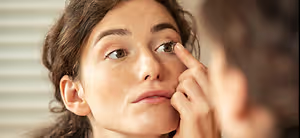
woman putting in a contact lens in front of a mirror

Contact lenses are a great alternative to wearing eyeglasses. Not all patients use contact lenses as their primary form of vision correction. Each patient is different, with some patients wearing contact lenses only on weekends, special occasions or just for sports. This flexibility allows contact lenses to fit a range of lifestyles.

If you choose contact lenses, they must fit properly, and you need to understand proper safety and hygiene. A contact lens exam includes a comprehensive eye exam, vision prescription, and measurements to ensure a proper fit.

The Importance of a Comprehensive Eye Exam

Even without vision problems, regular eye exams help maintain eye health and detect early signs of disease. A comprehensive eye exam at Oakley Square Eye Associates will check the general health of your eyes as well as the quality of your vision. During this exam, the doctor determines your eyeglass prescription, but this alone is not sufficient for contact lenses. The doctor may also check for any eye health issues that could interfere with the comfort and success of contact lens wear.

Hard-to-Fit Contact Lens Patients

Even if another provider has told you that you can’t wear contact lenses, we may be able to help. Specialty contacts are available for patients with dry eyes, severe astigmatism, and more.

The Contact Lens Consultation

The contact lens industry continues to improve comfort, convenience, and accessibility. During your consultation, you will discuss lifestyle and health factors that affect which lenses suit you best.

Options include daily or monthly lenses, as well as soft or rigid gas permeable (GP) lenses. If you have conditions like astigmatism or dry eye, your doctor will recommend lenses that improve comfort and vision.

Now is the time to tell your eye doctor if you would like to consider colored contact lenses as well. If you are over 40 and have trouble seeing small print, your doctor may recommend multifocal or monovision lenses.

Contact Lens Fitting

Contact lenses require a personalized fit. Your eye doctor will need to take some measurements to properly fit your contact lenses. Contact lenses that do not fit properly could cause discomfort, blurry vision, or even damage the eye. Here are some of the measurements your eye doctor will take for a contact lens fitting:

Corneal Curvature

To ensure a proper fit, your doctor measures the curvature of your cornea. Your doctor uses a keratometer to measure corneal curvature and determine the correct lens fit. If you have astigmatism, your doctor will fit a toric lens to improve vision and comfort. In certain cases, your eye doctor may decide to measure your cornea in greater detail with a mapping of the corneal surface called corneal topography.

Pupil or Iris Size

Your doctor may measure your pupil or iris size using a slit lamp or manual tools. This measurement is especially important if you are considering specialized lenses, such as gas permeable (GP) contacts.

Tear Film Evaluation

One of the most common problems affecting contact lens wear is dry eyes. If the lenses are not kept adequately hydrated and moist, they will become uncomfortable, and your eyes will feel dry, irritated, and itchy. If you have dry eye syndrome, your doctor will assess your tear film to determine if contact lenses are suitable.

During a tear film evaluation, your doctor uses dye or test strips to measure tear quality and moisture levels. If your tear film is weak, your doctor may recommend lenses that retain moisture better.

Contact Lens Trial and Prescription

After selecting the best option, your doctor may have you try lenses to confirm fit and comfort before ordering. The doctor or assistant inserts the lenses and leaves them in for 15–20 minutes before examining fit, movement, and tear response. If the fit is correct, your doctor will order them for you. Your Cincinnati eye doctor will also provide.
Follow-up

Your doctor may schedule a follow-up to ensure your lenses fit well and your eyes adjust comfortably. If you experience discomfort or dryness, visit your eye doctor as soon as possible. Your doctor may recommend a different lens, solution, or wearing schedule.

Contact us today to schedule your contact lens exam and fitting.